Quiz: Which CSS Snippet Is The Fastest?
Writing fast CSS is about knowing your CSS selectors, knowing your shorthand, and understanding how properties are best applied. What better way to sp

“Logos are dead. Or are they?”
Logos have been the visual cornerstone of branding for over a century, serving as a symbol of trust, recognition, and legacy.
But in 2025, the design world is witnessing a paradigm shift. From fluid branding systems to AI-driven experiences, logos are being questioned like never before.
Are logos merely symbolic relics of a bygone era, or are they still the linchpin of a brand’s identity in a world obsessed with storytelling and adaptability?
Once, logos were sacred—unchanging symbols that defined brands for decades. Today, the most forward-thinking brands are ditching rigidity for fluidity. Google’s daily doodles transform its logo into a storytelling platform, while Spotify’s dynamic gradients personalize the user’s experience.
The most provocative example? Warner Bros.’ recent brand overhaul. Its new visual system allows the iconic shield to adapt dynamically, changing color, texture, and style to match the mood of the content it represents. This signals a radical shift: the logo as a chameleon rather than an anchor.
If a brand’s identity is constantly evolving, does a single static logo still hold power? Some argue it’s no longer necessary when the brand itself has become the story.
The 2010s ushered in an era of flat design, hailed for its clarity and functionality. Yet this minimalist trend has homogenized logos to the point of irrelevance. Today, you can barely distinguish one tech startup’s logo from another.
Look at Instagram’s evolution from its detailed Polaroid-inspired camera to a generic gradient icon. Or Airbnb’s controversial redesign: a minimalist “Bélo” that was mocked online for resembling everything from genitalia to a certain fast-food chain’s logo.
Critics argue these trends have led to logos so oversimplified they’ve lost their soul.
On the flip side, proponents claim simplicity is power in an age where scalability is critical. A logo must work on everything from a smartwatch to a 50-foot billboard. But where does scalability end, and blandness begin?
Minimalism has turned logos into visual white noise. You can’t tell a fintech logo from a wellness app anymore.
AI has revolutionized branding, offering tools to create hyper-personalized experiences. Imagine a logo that changes color based on the viewer’s geographic location or one that adapts its shape depending on user data.
With this level of adaptability, a single, unchanging logo starts to feel outdated. Brands like Spotify and TikTok thrive by letting content—not their logo—do the talking.
But here’s the catch: while AI can make logos smarter, does it also dilute their importance? If the user remembers the experience but not the brand’s logo, does the brand still win?
Logos used to be the focal point of marketing campaigns. Today, social media has shifted the narrative. Younger audiences remember viral TikToks, Twitter wars, or meme-worthy moments far more than they remember a logo.
Brands like Duolingo have embraced this shift, using bold personalities and relatable humor to dominate platforms like TikTok. Their mascot is more recognizable than their logo.
Similarly, Ryanair’s cheeky tweets and Wendy’s savage roasts outshine their visual identities.
Why spend millions on logo redesigns when a single viral meme can create more brand awareness than a symbol ever could?
Despite the rise of fluid branding, adaptable systems, and viral personalities, logos still hold value. They provide a sense of permanence and trust. Consider Apple’s bitten apple or McDonald’s golden arches—symbols that remain etched in collective memory, regardless of trends.
Moreover, logos still play a crucial role in offline spaces. From storefronts to product packaging, a logo is often the first and most enduring interaction a consumer has with a brand. While it may no longer dominate, the logo remains an essential anchor in a fragmented brand ecosystem.
Logos aren’t dead—they’re evolving. The challenge isn’t relevance; it’s integration.
Logos may no longer reign supreme as the solitary representation of a brand, but declaring them irrelevant is premature.
Their role is shifting—from a static mark to a flexible, integrated component of broader branding systems.
For designers, this isn’t a death knell but a challenge: create logos that are not just memorable but adaptable, scalable, and capable of evolving with the brand.
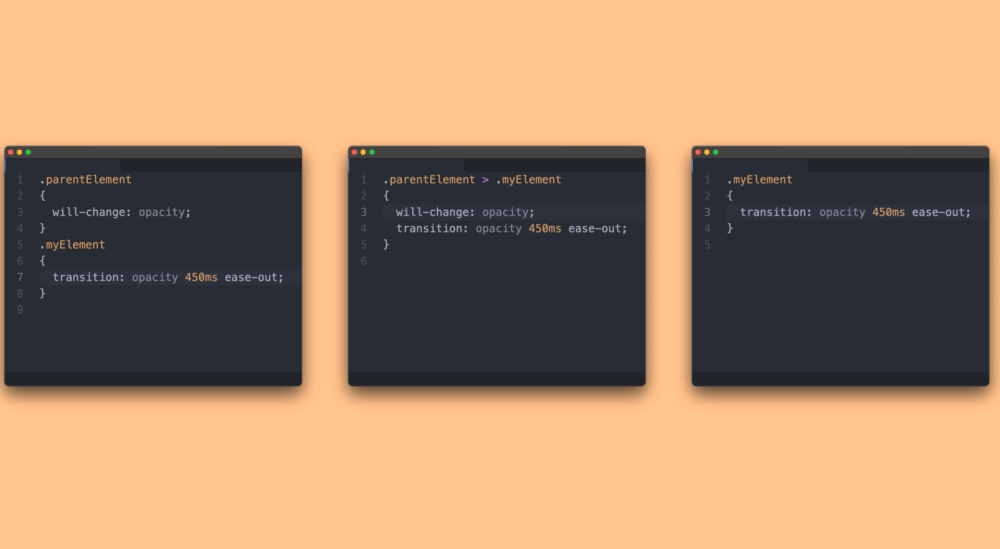
Writing fast CSS is about knowing your CSS selectors, knowing your shorthand, and understanding how properties are best applied. What better way to sp

But first, we will explore what UX research is and how it can give you valuable tools. Then we will analyze why user research is an ongoing, dynamic p
For a while now, companies have been experimenting with all kinds of motion and animation in their design choices. We’ve seen the rise of animated web

The 17th May 2018 is Global Accessibility Awareness day, which makes today the ideal time to consider how inclusive our experiences are for those user

WebVR is an amazing way to create immersive 3D Virtual Reality experiences in the browser. It’s an experimental specification of Javascript API’s and

There are many occasions when we get stuck or overwhelmed for hours in front of a new project. This is where creating wireframes can be beneficial. A
We are a dynamic information platform dedicated to delivering timely, relevant, and reliable content across a broad spectrum of topics. From the latest in technology and business to lifestyle, health, and global affairs, we aim to keep our readers informed and inspired.
Our editorial team is committed to maintaining high standards of accuracy and clarity, ensuring that every article provides value and context in an ever-changing world. We believe in the importance of accessible knowledge and strive to make complex topics understandable for everyone.
Whether you're here to stay updated on current events, explore thought-provoking features, or simply learn something new, our goal is to offer a trustworthy source of information that meets the needs of a diverse and curious audience.