6 Simple Steps to a Career in Web Design
If you’re a half-decent designer or a relatively competent developer, then there’s no reason you can’t make a living as a web designer. Here are six s

Marketing is a waste of time. At least that’s how it feels for many designers. They’re not getting enough traffic, clients or sales. In fact, everything about getting customers feels like a slog. It feels like they’re spinning their wheels.
Maybe you can relate.
Marketing is tough when you don’t feel you know what you’re doing. Which is exactly why so many designers are unsure about what to say, who to say it to or when. No wonder we make mistakes. Our mistakes lead to pain and disaster. But marketing mistakes aren’t where things go wrong. They go wrong right from the start. The errors are subtle, easy to miss and very expensive.
It’s horrible because the choices you make, what you do in the beginning, sets the tone for everything after. Clients are like kids. Train them well and your relationship grows. Set limits and expectations and they’ll trust you. Become a worthy leader and they’ll follow.
[pullquote]Clients are like kids. Train them well and your relationship grows. Set limits and expectations and they’ll trust you[/pullquote]
I’m going to make an educated guess. You probably want more clients, right? Not only that, you want a consistent stream of new clients every month. When you’re done serving these clients, you want them to buy more. You want to make more money, doing less and less work.
You’d like to avoid predators, tire kickers and knowledge vampires. You prefer to work in a drama free zone that’s enjoyable, profitable and on your terms.
That about right?
If you want some or all of those benefits you’ll need avoid making certain mistakes. Mistakes like…
Have you ever offended someone accidentally? When you meant to give them a compliment, but it was received as an insult?
That’s the four ears model at work. The four ears model states that anything you communicate, whether it’s written down or read aloud sends four different messages, on four different layers:
So why is this a problem? People, professionals, designers, have a habit of sharing damaging information like this.
The Google-Please-Hire-Me guy desperately wanted to work at Google. But Google rejected him, choosing to ignore his messages after things became needy. When designers struggle with negative feelings — neediness, insecurity, fear — it seeps into their conversations. Whatever your client sees in your marketing gets filtered through those negative feelings from that point on.
Speak intentionally. Think about the message you send in your marketing. Use the four ears model to create the kind of message you want to send.
Whatever you do avoid using the four ears model accidentally.
What do designers, plumbers and attorneys have in common? They all offer free consultations.
The vast majority of service providers offer free quotes, free estimates, free consultations. And the vast majority of them are abused by freeloaders, tire kickers and knowledge vampires.
But this abuse isn’t the worst part. It’s the one-on-one selling. The more “free consultations” you offer, the less time you have to work on your business and the less time you have for yourself. A sharp increase in free consultations can easily double or triple your workload.
As you become more “successful” the free consultation model traps you in your business, taking more and more of your freedom.
Try this instead:
Then, create leverage pieces to market your business. Send people to these leverage pieces and you’ll attract a consistent stream of customers, all without being personally involved.
Let’s pretend you have a bicycle. You ride it everywhere, to work, to the store, to your friend’s house. You’re in great shape but it’s getting old. When it comes to traveling, a bicycle only goes so far. You want a car, so you buy a car.
It’s a solution to your bicycle problem, but it’s also another problem. Because that car needs oil changes, cleaning, maintenance. If something goes wrong you’ll have to take it into the shop. Your car was supposed to solve your big problem, and it did. But your problems have suddenly multiplied.
It’s no different with you and your clients. Your clients want your solution to their problem. But that solution creates more problems. If they buy a website they’ll need hosting, maintenance, email, advertising and on and on. Here’s what that means for you: Every solution creates more problems that need to be solved. It’s a never ending cycle but it’s your responsibility to take care of that for your client. Which most designers don’t do because they…
“I hate marketing. I’m scared, what if they yell at me? I’m a designer, not a salesperson.” It’s a common objection that points to something most designers don’t want to do.
I get it. Being vulnerable, putting yourself out there, facing rejection, it sucks. Especially if you’re not sure how you’ll be received. Add imposter syndrome to the list of struggles and asking for the sale becomes a terrifying ordeal.
Stop selling. Start asking questions about the problem. Questions allow you to control the flow and direction of a conversation. But it also helps you avoid overt rejection. Ask your clients about their plan to deal with the new problems they now have to face.
“You mentioned that your site has to be fast. How are you going to maintain that speed now that the redesign is done? You’ll need…”
If clients are clueless about this, they may feel embarrassed they didn’t have an answer. So it’s important to treat them with compassion. Listen to them, be genuine, be kind. Then, you explain the solution. Problems attract attention on their own.
Problems create stress and anxiety.
Solutions relieve stress and anxiety.
It’s a never ending cycle that shouldn’t stop. Not if you’re looking out for your client anyway.
Let’s say you’ve found your ideal client. You’ve done all the work you need to do to attract their attention. They’ll have questions, objections, concerns. Something’s kept them on the fence, but you’ve dealt with their problems. You know they’re more likely buy.
What’s the one thing that pushes your customers off the fence?
It’s hard to figure out isn’t it? It could be a bonus you’re offering, your blog post, an email you sent out, anything. You can ask, but most clients won’t tell you—even worse that one thing is different for every client. So how do you know which detail matters most? You don’t know.
Try this instead: You tell the whole story, giving clients everything they need to make an informed decision. You’re not sure what specific detail will get them to buy, so you give them everything. What’s worse, clients bounce around. They jump from point to point on your web page, scanning for details, anything that jumps out at them.
When you tell the whole story, you eliminate information asymmetry. You give clients all of the information they need to make their decision… for or against you. Fail to do that and they simply move on. When there isn’t enough information — pictures are missing on your about page, no uniqueness, poor presentation, clients run.
Tell the whole story and they’ll stay long enough to make their decision. But telling the whole story takes too long, right? Actually no. It’s easy to give clients what they want when you know what they’re looking for.
Most clients won’t get these details. Their designers won’t ask them the right questions and they won’t get what they need.
Start your marketing off on the right foot, and you won’t waste your time. You’ll be prepared to attract the traffic, clients, and sales you need to grow your freelance business. Do it right and you won’t spin your wheels. Do it wrong, and you’ll struggle to get the results you need.

If you’re a half-decent designer or a relatively competent developer, then there’s no reason you can’t make a living as a web designer. Here are six s
This month, there are tons of great new agency websites to get excited about. 3D animated prisms are a popular theme, and typography is getting bigger
A key part of designing successful websites for clients is making sure that as many end-users as possible can access and enjoy that site.So, what if y
Let’s be real—the internet is broken. It’s a mess! Once upon a time, it was this wild, open frontier, a digital playground where anyone with a dial-up

With the update scheduled to roll out in May 2021, now is the time to make sure your websites are prepared for it. It’s taking a lot of the best pract
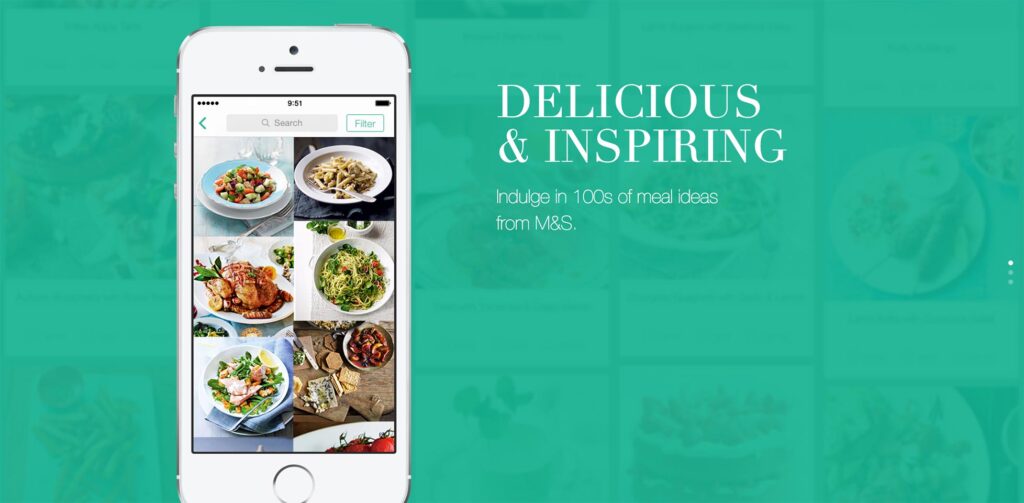
With web users increasingly time-strapped and suffering from information overload, there’s definitely a sense of relief when encountering a site where
We are a dynamic information platform dedicated to delivering timely, relevant, and reliable content across a broad spectrum of topics. From the latest in technology and business to lifestyle, health, and global affairs, we aim to keep our readers informed and inspired.
Our editorial team is committed to maintaining high standards of accuracy and clarity, ensuring that every article provides value and context in an ever-changing world. We believe in the importance of accessible knowledge and strive to make complex topics understandable for everyone.
Whether you're here to stay updated on current events, explore thought-provoking features, or simply learn something new, our goal is to offer a trustworthy source of information that meets the needs of a diverse and curious audience.