6 simple rules for explaining the web to clients
One of our biggest challenges when producing client work is communicating technical information effectively with clients. Many developers in our commu

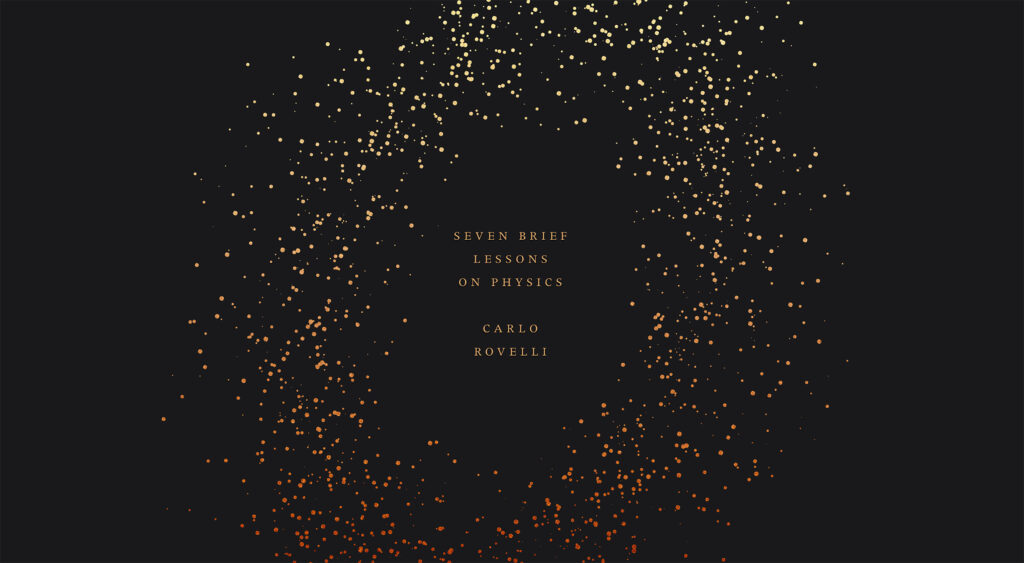
For over a decade, designers have debated what constitutes simplicity in user experience design.
As Robert Hoekman Jr. points out in his article When It Comes to UX Design, Simplicity is Overrated, the variation in semantics is confusing. Simplicity could refer to a clean design (then there’s the disparity of what “clean” actually looks like), the complexity of the experience, or even the required coding.
These definitions can vary further between users and designers, and clients and stakeholders.
“As designers, we assume we all agree on its meaning. To us, simplicity is a high goal of design,” Hoekman Jr. writes in the aforementioned article. “‘Simple’ is a relative word, granted. It has no definitive value; the simplicity of a thing can only be measured in comparison to something more complex.”
It turns out simplicity is actually quite complicated.
When defining simplicity by aesthetic, perhaps there is no more perfect an example than Google. When a user goes to the website, they are presented with only one input: the search bar. This search bar then auto fills possible search queries based on complicated algorithms before pulling a list of relevant search results. Compare this to Yahoo, where a user is bombarded with information and options.
To the user, both Google’s interface and the experience are simple and self-explanatory even though the backend of the application is not.
“I think simplicity ties in a lot with intuition. That notion of whether the user experience is intuitive in nature makes the end result a very simple and delightful user experience,” said Dominic Wong, the head of experience design at Invoke. “Do I know instinctively what to do? And if I if I go out and do it, is it actually aligning to my behavioral expectations of an experience?”
The simplicity of Google is perhaps part of the reason why “Google it” became a part of our lexicon. The experience is designed in such a fashion that it is easy for a user to find what they are looking for—and find it quickly.
[pullquote][UX] is threatened when the simplicity of an interface design comes at the expense of usability[/pullquote]
User experience is threatened when the simplicity of an interface design comes at the expense of usability, such as when elements are buried, buttons are not labeled clearly, or the user is unfamiliar with the navigation. Even simple design needs to be strategic and take into account the users’ customs.
“Simplicity has to tie in with how to guide someone to intuitively make decisions,” Wong said.
When it comes to simplicity and functionality, maintaining consistency in what a user innately expects from an experience is perhaps equally as important as accounting for the fact that today’s users are also accustomed to getting what they want right away.
Like it or not, we’re deep in the age of instant gratification and this needs to be taken into consideration when designing a user experience.
“People are expecting less flashiness and a certain level of utility,” Wong said.
“I think nowadays when the visual or stylistic elements become overbearing, it actually detracts from the experience.”
While there are opportunities to create lush user experiences and interfaces, they need to be appropriate to the end goal—both that of the user and of the design. You don’t want the user interface to distract from the user experience. Rather, you want to offer the user what they came for in a prompt manner that is easy to follow and understand.
“The best way to grab attention and build interest is to present a single core idea, fully fledged,” wrote Daniel Ritzenthaler on 52 Weeks of UX. “This allows the user to make a binary decision about it: ‘Am I interested or not?’ Introducing a feature in a way that people can instantly map it to a desired outcome will help them prioritize and be confident about their next step.”
One might think then that simplicity equates to minimalism, but it is more about giving users only what they need. When you give the user just enough, simplicity can prevail, even when dealing with complex applications.
Wong spoke of a recent project involving the redesign of a dental application that required numerous complicated, but essential elements. The experience needed to be simple to use without sacrificing the complexity of the interface. The team had to design the experience so that the application contained all the necessary elements, but only showed the user what was necessary for the desired outcome at that moment.
You don’t want to include anything that will distract or require someone to put more effort into obtaining what they need to obtain—Dominic Wong
While much of simplicity’s semantics continue to be debated, Wong says in the end it’s really about this one very thing: serving users what they need, when they need it in the most straightforward way possible.

One of our biggest challenges when producing client work is communicating technical information effectively with clients. Many developers in our commu
Web design has always lived at the intersection of creativity and technology. It’s a practice that’s evolved not just in response to technical advance

There’s a tendency within the design community to depict freelancing as a goal to be achieved. Who wouldn’t want to lie in every day, do two hours of
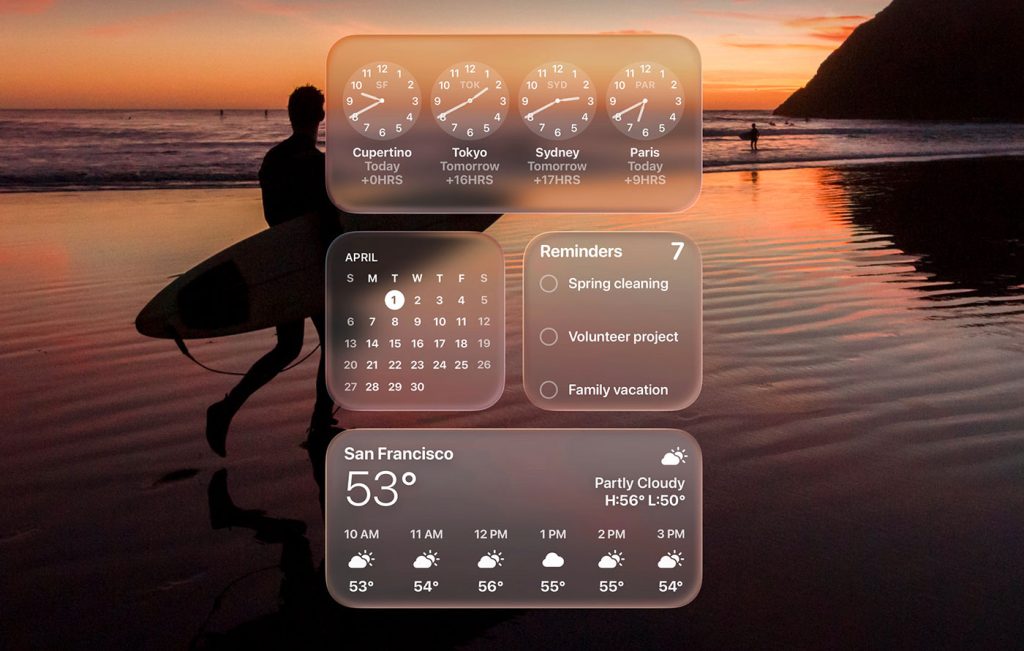
By now, everyone’s talking about Liquid Glass, Apple’s new design language unveiled at WWDC 2025.At first glance, it looks like another glossy facelif

How long ago did you start your design business or side gig? Three months? Three years? And how long has it been since you evaluated your business sin

There are many reasons you might be wanting to improve your design skills this year. Perhaps you have extra time on your hands and want to put it to g
We are a dynamic information platform dedicated to delivering timely, relevant, and reliable content across a broad spectrum of topics. From the latest in technology and business to lifestyle, health, and global affairs, we aim to keep our readers informed and inspired.
Our editorial team is committed to maintaining high standards of accuracy and clarity, ensuring that every article provides value and context in an ever-changing world. We believe in the importance of accessible knowledge and strive to make complex topics understandable for everyone.
Whether you're here to stay updated on current events, explore thought-provoking features, or simply learn something new, our goal is to offer a trustworthy source of information that meets the needs of a diverse and curious audience.