6 Best AI Productivity Apps in 2024
There’s no escaping it: if you want to be successful, you need to be productive. The more you work, the more you progress, which for many people means


Let’s be blunt—scrolljacking is the design equivalent of taking the steering wheel out of a driver’s hands and saying, “Don’t worry, we’ve got this.” Except… the driver is your user, and they weren’t asking for a chauffeur.
Scrolljacking flips the script on one of the oldest, most sacred agreements in web UX: you scroll, the page moves—exactly when and how you expect.
It’s a contract born in the early days of the web, reinforced through decades of muscle memory, and enshrined in the unwritten UX constitution. Break it, and you break trust.
When you hijack scroll behavior, you’re doing more than irritating people—you’re disrupting the control loop between human input and visual feedback. This is the same loop that governs video games, VR, even piloting a drone. Introduce a delay, force a speed change, or snap to an arbitrary point, and you’ve injected friction into a core navigational reflex.
Users feel this immediately. Their hands know what “one flick” on a trackpad should do. Their brains predict where the viewport will land. Scrolljacking says, “Nope, we’re doing my thing now,” and that disconnect isn’t just cognitive—it’s physical.
Designers often defend scrolljacking as storytelling. The thinking goes: if we control scroll speed, animations, and section breaks, we can pace the narrative like a film. Nice theory. But here’s the thing: a web page is not a movie.
In cinema, the director always controls pacing. In web UX, the user does.
Scrolljacking is essentially saying, “We know better than you how fast you should read, process, and move on.” That might fly for a product launch microsite that’s more spectacle than substance. But try that on a documentation site, dashboard, or content-heavy page, and you’re actively degrading usability in favor of ego.
Some UX sins are subtle. Scrolljacking isn’t. It’s a classic anti-pattern:
If you’re thinking “But Apple did it…”—remember that Apple also has the luxury of a high-friction walled garden where users tolerate quirks because the brand buys goodwill elsewhere. You? Probably not.
Here’s where it gets sneaky. Modern implementations don’t slam the brakes on your scroll—they feather the controls. They ease you into fixed-duration animations or snap points so subtly you almost don’t notice.
Think of it like lane assist in a car: you’re technically still steering, but the system is nudging you toward where it thinks you should go. This “soft scrolljacking” shows up in:
To casual users, it feels “smooth” and “polished.” To power users, it’s still an override—just wrapped in better PR.
And while it may pass unnoticed in portfolio sites or product teasers, it’s still risky in functional contexts. Even gentle control theft is still control theft.
Every designer has that moment. You’re building a visually rich page, animations in your head are choreographed to the scroll wheel, and you think, “This is going to be slick.” And it might be—on your high-end laptop, with your perfect internet connection, in your ideal browser.
But readers know: UX isn’t about how good it feels in the perfect conditions. It’s about how bad it feels when something breaks.
And with scrolljacking, something will break—touch devices, keyboard navigation, reduced motion settings, trackpad acceleration, you name it.
Scrolljacking doesn’t just remove control—it removes trust. And in UX, once trust is gone, no amount of animation polish will win it back.
You can still tell stories. You can still guide pacing. But do it through design that invites, not design that hijacks. Because the best interface is the one that moves exactly when the user says so—and no sooner, no later.

There’s no escaping it: if you want to be successful, you need to be productive. The more you work, the more you progress, which for many people means

As the managing attorney of a commercial law boutique practice, I am asked several times per week some variation of the following question:How should

When your grandkids ask you where you were when AI took over, you’ll be reminiscing about February 2023.ChatGPT Goes ‘Pro’First, we felt a great distu
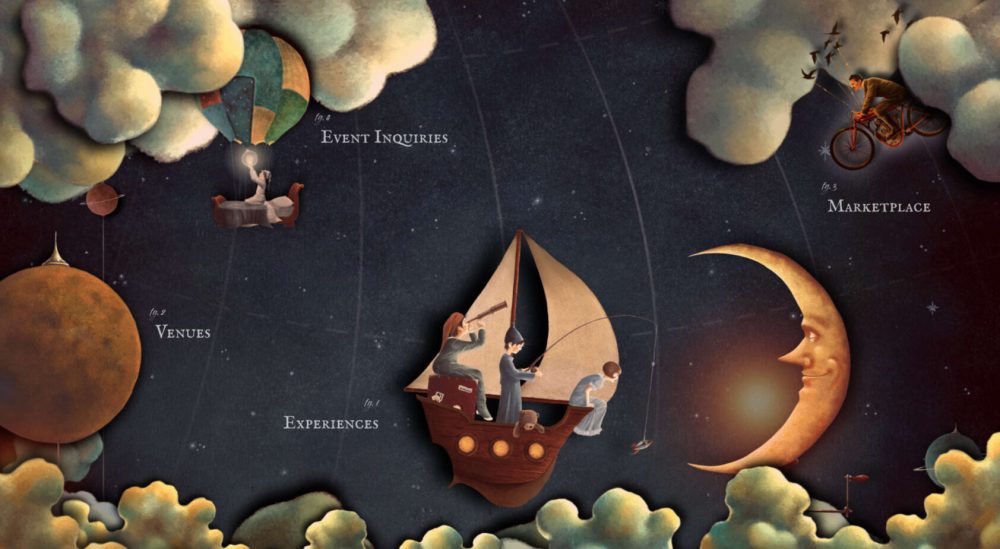
Pictures cross-language and literacy barriers, allowing people to understand and communicate complex moods and feelings that they cannot in words. Whe

If we were to gather a hundred different designers into one room and ask them one-by-one how they approach UX design, we would get approximately one h

Welcome to our April tools collection. There are no practical jokes here, just practical gadgets, services, and apps to make life that little bit easi
We are a dynamic information platform dedicated to delivering timely, relevant, and reliable content across a broad spectrum of topics. From the latest in technology and business to lifestyle, health, and global affairs, we aim to keep our readers informed and inspired.
Our editorial team is committed to maintaining high standards of accuracy and clarity, ensuring that every article provides value and context in an ever-changing world. We believe in the importance of accessible knowledge and strive to make complex topics understandable for everyone.
Whether you're here to stay updated on current events, explore thought-provoking features, or simply learn something new, our goal is to offer a trustworthy source of information that meets the needs of a diverse and curious audience.