Branding 101: How to Get Your Design Business Online
You’ve named your business. You’ve sorted out the visual branding piece. Now, it’s time to get your business online so you can start making money.In t


User testing used to be a clunky, expensive mess. Remember trying to recruit five “ideal users” who were just available friends of coworkers?
Then awkward Zoom calls where someone fumbles through your prototype while nervously narrating their clicks, followed by hours of painful video review? Yeah, that era should be over.
Because in 2025, AI has completely flipped the table. We’re not just talking automation—we’re talking simulation, prediction, and real-time insight extraction that puts old-school usability testing to shame.
And if you’re still testing designs like it’s 2019, you’re not being thorough—you’re being nostalgic.
Let’s be honest. Most usability testing wasn’t that usable. You’d run a few sessions, hope the feedback was actionable, then cherry-pick quotes that matched whatever your designer gut was already telling you.
It was expensive, time-consuming, and often based on unrepresentative users giving forced feedback.
Worse, teams did it out of obligation, not excitement. Testing became a checkbox. And insights? Delayed, biased, or buried in a 27-slide presentation no one ever finished reading.
Now? AI doesn’t just assist—it does the heavy lifting. Instead of waiting for five human testers, you can generate a hundred synthetic users that walk through your flow within seconds. These aren’t just click-bots. They behave, comment, and even “think aloud” like real people. Scary accurate. Uncannily useful.
And no, it’s not sci-fi. Companies are using this today. Entire design teams are validating flows overnight—while they sleep. What used to take weeks now takes minutes. You tweak a CTA, hit upload, and an AI swarm stress-tests your UX before lunch.
Suddenly, “we didn’t have time to test” isn’t a valid excuse anymore.
Traditional usability sessions relied heavily on the moderator not screwing things up. One leading question, and your entire insight gets contaminated.
AI doesn’t have a bad day. It doesn’t cut people off mid-sentence or forget to ask about the error message. AI-led interviews now guide users through tasks, ask intelligent follow-ups, and analyze their tone and sentiment on the fly. Everything’s transcribed, scored, and sorted before you finish your second coffee.
No more waiting on the intern to summarize recordings. No more guessing what the user “meant.” AI hands you clarity—packaged, labeled, and ready to act on.
Remember when testing meant begging people to try a prototype? Now, your live users are testing your site every second—they just don’t know it.
Modern UX tools powered by AI are watching scrolls, clicks, hesitations, and rage-quits in real time. They spot drop-off points, bottlenecks, and dead zones with chilling precision.
Got a product tour that everyone skips? An AI will spot it and tell you why. That form that never gets completed? You’ll get a heatmap, predictive abandonment rate, and a recommended fix—before your team even realizes there’s a problem.
User research no longer starts at scheduled sessions. It’s always on. Your site is your lab.
Let’s not pretend AI is flawless. It learns from datasets, and those datasets are biased. That means it might not fully understand edge cases, like neurodivergent users or niche cultural behaviors.
But here’s the thing: traditional testing wasn’t bias-free either. It was just biased differently—usually by the humans running it.
AI forces us to be more aware. It pushes teams to ask, “Who trained this?” “What blind spots are built in?” “Are we getting inclusive feedback or just faster feedback?”
So yes, AI helps kill some old-school biases. But it also creates new ones. The difference is, you can interrogate an algorithm. Try doing that with an overconfident UX lead.
Possibly the best part of AI-driven UX? Testing is no longer an event—it’s a background process.
You push a new feature live. The AI starts gathering feedback instantly. It tests copy variations. It watches for friction. It recommends changes. It never sleeps.
The result? You’re no longer stuck in testing sprints and research cycles. You’re always testing. Always learning. Always improving.
Continuous UX isn’t a buzzword anymore. It’s just how good teams work now.
If AI does the interviews, simulates the users, flags the issues, and suggests the fixes… what exactly do UX designers and researchers still do?
They make decisions. They apply judgment. They ask the weird “what if” questions AI can’t even formulate.
AI tells you that 80% of users ignore your onboarding modal. You decide whether to redesign it, remove it, or rebuild your product so it doesn’t need onboarding at all.
Great designers use AI as their eyes and ears—but not their brain. The real value now comes from interpretation, direction, and intent. From designing with meaning, not just optimizing for metrics.
Look, no one’s saying human insight is dead. But if you’re still booking moderated tests, watching 90-minute user recordings, and waiting a week to debrief… you’re falling behind.
AI is letting teams test faster, smarter, and more broadly than ever before. And it’s not just for Big Tech. These tools are affordable. Some are free. There’s no excuse.
If you’re still testing like it’s the age of jQuery and hamburger menus, you’re not being “thorough”—you’re being left behind.
This isn’t the future of UX. This is the present.

You’ve named your business. You’ve sorted out the visual branding piece. Now, it’s time to get your business online so you can start making money.In t
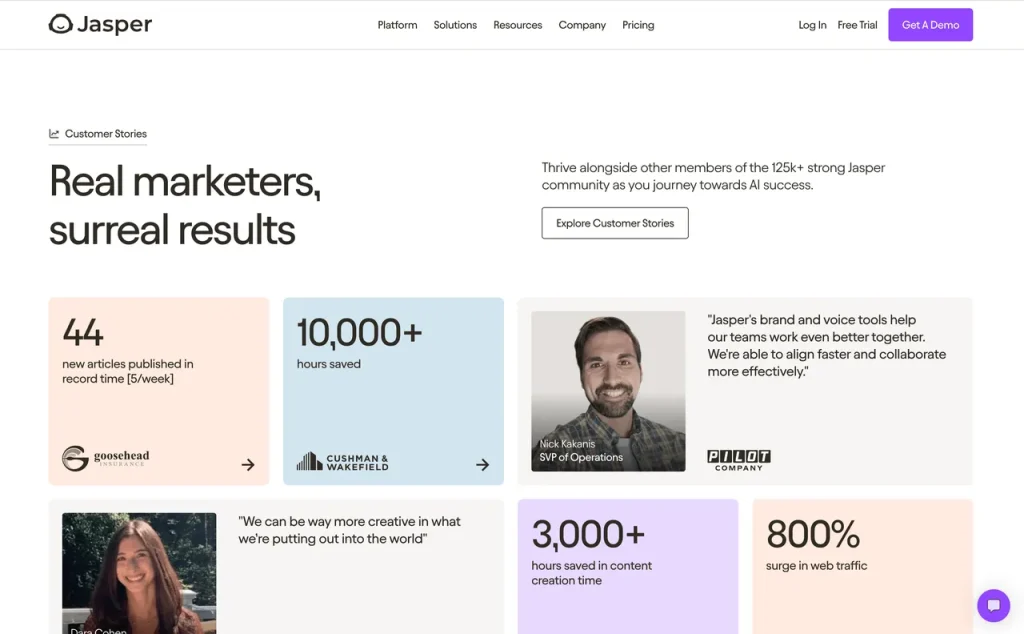
Something Missing on Your Landing Page? It’s Probably This.You’ve been there. Staring at your landing page thinking, “It’s fine, but… something’s off.

Getting your project organized and easily manageable is always a challenge when working as a part of a team. The problem reaches a whole new level whe
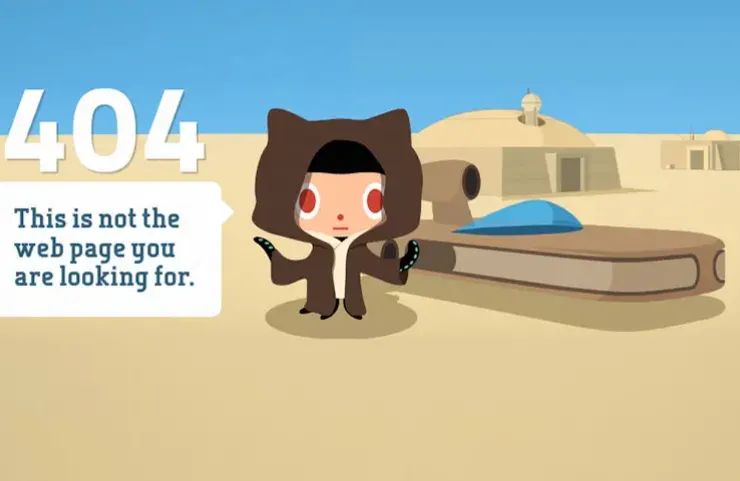
404 pages are one of the most overlooked aspects of any website design, and when they’re not overlooked, the tendency is to create something fun—in th

As regular readers will know, each month we roundup the best new designs of the previous 4 weeks. And now, at the end of the year, we’ve selected our

Let me say this first: flexbox is easy. Whether it’s because of early-adoption issues, or because we’ve learned to think in terms of floats and blocks
We are a dynamic information platform dedicated to delivering timely, relevant, and reliable content across a broad spectrum of topics. From the latest in technology and business to lifestyle, health, and global affairs, we aim to keep our readers informed and inspired.
Our editorial team is committed to maintaining high standards of accuracy and clarity, ensuring that every article provides value and context in an ever-changing world. We believe in the importance of accessible knowledge and strive to make complex topics understandable for everyone.
Whether you're here to stay updated on current events, explore thought-provoking features, or simply learn something new, our goal is to offer a trustworthy source of information that meets the needs of a diverse and curious audience.