5 Signs That Web Design Is Reaching Its Own Industrial Age
The Internet as a concept, and as a community, is much like a teenager: it’s struggling to establish its identity, everyone is trying to tell it what

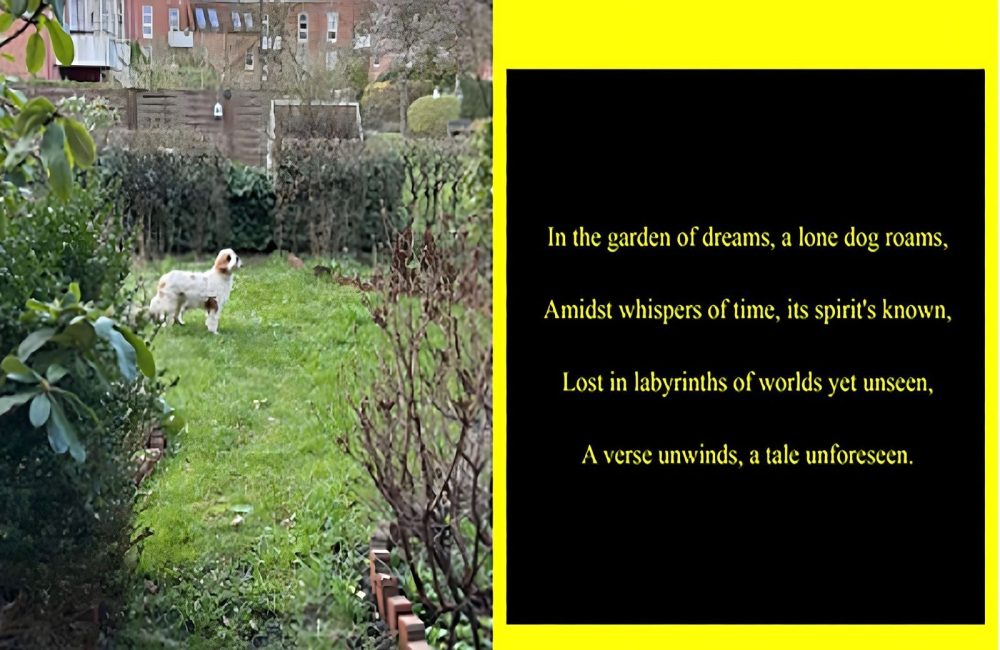
We’ve all been inundated with reports on the power of generative AI recently. Text-to-image generators like Midjourney, Adobe Firefly, and GPT-4 are adept at creating vibrant images from user-provided prompts. Now, however, the tables have turned.
Pamera – The Poem Camera – is an image-to-text generator. Or, more specifically, an image-to-poetry generator. Powered by ChatGPT-4 and an object identifier AI, Pamera creates personalized poems based on real-time images provided by users. Simply snap a picture within the app, and, within seconds, you’ll have a thoughtful, relevant, and often bizarre poem to accompany your photo.
Pamera is the brainchild of Damjanski, a technologist and artist based in New York. He programmed the app’s poetry to mirror the style of Jorge Luis Borges, an Argentine writer, essayist, and poet. Borges’ trademark magical realist style is ideal for this sort of thing. It’s the perfect way to inject a touch of fantasy into everyday, mundane imagery.
Source: Damjanski
If you’ve tracked the bumpy journey of AI over the last year, it’ll come as no surprise that Pamera isn’t perfect. The generative AI occasionally creates poems that have very little to do with the subject matter of the image provided. When I took a photo of my living room, the resulting poem referenced a doll, despite there being no dolls in the image. Either the app is misinterpreting what it sees, or I should be worried.
Flaws aside, Pamera is an exciting reminder that we’re yet to experience all the possibilities AI has to offer. While the app won’t make you a wordsmith, it will provide you with a clever Instagram caption whenever you need it. Plus, every now and again, it may just conjure up something genuinely poignant. You can try the new Pamera app on iOS today.
The Internet as a concept, and as a community, is much like a teenager: it’s struggling to establish its identity, everyone is trying to tell it what

Almost two decades ago Steve Krug first advised us not to make users think. Today designers strive to create experiences that require no extra effort

Domain Authority (DA) is a ranking metric that predicts how well a site will rank online. It goes by a scale of 1 to 100 — the closer you are to 100,
The web is drowning in beauty. Or at least, what passes for beauty these days — polished gradients, 8px border radii, hero sections that look like the

Let’s talk about the ancient art of the thumbs-up and thumbs-down — once the sacred, clumsy handshake between user and algorithm.In the early days of

Web design trends are evolving faster. Blame the ever-decreasing user’s attention span. The average visitor now spends just 0.5 seconds scanning your
We are a dynamic information platform dedicated to delivering timely, relevant, and reliable content across a broad spectrum of topics. From the latest in technology and business to lifestyle, health, and global affairs, we aim to keep our readers informed and inspired.
Our editorial team is committed to maintaining high standards of accuracy and clarity, ensuring that every article provides value and context in an ever-changing world. We believe in the importance of accessible knowledge and strive to make complex topics understandable for everyone.
Whether you're here to stay updated on current events, explore thought-provoking features, or simply learn something new, our goal is to offer a trustworthy source of information that meets the needs of a diverse and curious audience.