Why Algorithms Are Ruining Your Web Experience
The internet was once a place for discovery. A space where curiosity could roam free, where you could stumble across something entirely new, and where


When you are just starting out in a web development business, it can be really tempting to try to handle most (if not all) of the work entirely by yourself. It’s not hard to understand the logic: the more of the work you complete personally, the more of the profits you get to keep, right?
But there’s a side to this approach that many new entrants to the industry overlook when they decide to start up an independent business instead of joining an established agency: if you do most of the work yourself, you may end up spending nearly all your time working. Inevitably this means late nights, gallons of cola and countless home-delivered pizzas. You end up with red eyes, bad skin and a swollen belly…hardly what you envisioned when you first decided to go into business!
You also probably won’t make nearly as much money, because if you are immersed in code and dealing with customer problems and follow-up work, you can’t devote as much energy to generating new customer leads. Before you know it, many of these solo flyers are burnt out and nearly broke.
Fortunately it doesn’t have to come to that, because if you can see the wisdom of team-building, delegation, and sharing wealth for mutual benefit, then you’ve already improved your odds of success. There’s just one last thing standing in your way… you have to find the right people to work with.
A good web development project nearly always has the following necessary roles:
[pullquote]just because you are building a team does not mean that nobody can multi-task[/pullquote]
In addition to the core roles listed above, there is sometimes a need for specialists:
Let me be clear that just because you are building a team does not mean that nobody can multi-task. So the team you put together does not necessarily have to be large, and in fact there can be disadvantages to having a team that’s too big.
Generally speaking, the larger and more important a project is, the more specialized your team needs to be. Smaller and less important projects allow more scope for individuals to perform multiple roles in the development process.
The first logical step is to determine your own role in the team.You may be tempted at this stage, since you’re the business owner, to automatically assume you should also be the project architect and project manager, since the names of those roles implies leadership.
[pullquote]Never let your ego get in the way of good business decisions[/pullquote]
But stop and think for a moment… is this your strength? If you see yourself as more of a coder or an illustrator, then it may be wise to consider delegating the management roles to somebody with more experience or ability in those roles and taking responsibility for the area of expertise where you are strongest. Never let your ego get in the way of good business decisions.
Now you come to the fun part, which is also by far the most difficult part.It is time to select your co-workers. The first thing to know about this is that it’s usually better to maintain a permanent core team who perform the same roles in each project, and when necessary you can consider bringing in additional freelance workers on a temporary basis to fill special needs of a project.
If you have to mess around building new teams for every project, you’ll waste more time and spend more money, and occasionally you’ll get disappointing results. You could even lose clients. So find people that you like and trust, and make them a permanent part of your team.
The mistake that many people make when hiring is to define lists of skills that are too complex and too restrictive. Sometimes hiring managers don’t even understand the role. For example, here are the requirements listed for a recently advertised front-end developer role:
If you can’t see the problems with the above, then you are part of the problem. Very few of the skills listed as required skills have anything to do with front-end development. Most of the skills are back-end, administration, and marketing skills. It absolutely does not make sense to require these skills for a front-end developer, and you may lose quality candidates by making such a restrictive list.
Another thing you need to know is that the requirement for familiarity with agile methodology is also ridiculous. Agile development is effective in software development where the projects are large and require months of high-level investment. Web projects are completely different and it’s just a straight-out waste of money to use agile methods in most web development environments as you’ll need to hire extra coders that you don’t really require.
A much better way to advertise for a front-end developer would be to simply specify:
During the interview process, focus mainly on the third factor, because it is far more important to the success of your projects than any amount of coding ability. You have to assume that anyone who can write quality custom JavaScript has the ability to look up how to do anything that needs to be done in some other more obscure language. Don’t list the obscure development language as a required skill, because you’ll miss getting a top-notch JavaScript programmer, which is more vital to your business.
Most small development agencies should be able to fill all the required core roles with just 3 or 4 staff, appointing freelancers where necessary. As your business grows, you should start to think about narrowing down the tasks that each person has to cover and creating a bigger team.
Try to avoid developing a corporate hierarchy and culture. That kind of thing is what leads to the stagnation and failure of creative businesses; with an hierarchical structure, you get competition between your staff, you get people being promoted up to their level of incompetence, and you get divisiveness.
What you really want is everyone having equality within the organization, no major differences in pay between people with different roles, and everyone feeling like they make a valuable contribution to the success of the team. In this way you can ensure you have an effective development team who will grow your business and expand your portfolio more quickly.
Featured image, teamwork image via Shutterstock.

The internet was once a place for discovery. A space where curiosity could roam free, where you could stumble across something entirely new, and where

If you were paying close attention to your IT department around the 8th of December, you might have heard some quiet sobbing and the occasional wail o

In recent years, we’ve seen various updates to the web design landscape, such as the arrival of AR and VR solutions for making mixed media. Video cont
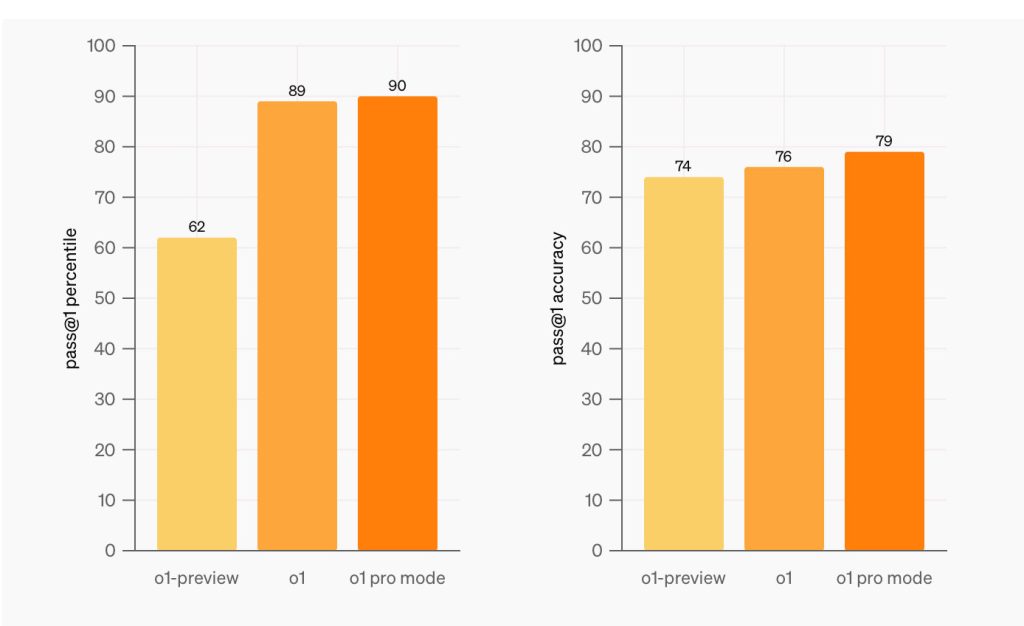
OpenAI has just leveled up its game with ChatGPT Pro, a premium subscription aimed at users who want to supercharge their coding, research, and innova

There’s no simple answer to that, it can be any of these things, or any combination of them. Hitting the right note with the design so it fits the sub

Recently I have encountered more and more people asking for one specific thing: words, and lots of them. No, truly, I mean a lot of them. They want lo
We are a dynamic information platform dedicated to delivering timely, relevant, and reliable content across a broad spectrum of topics. From the latest in technology and business to lifestyle, health, and global affairs, we aim to keep our readers informed and inspired.
Our editorial team is committed to maintaining high standards of accuracy and clarity, ensuring that every article provides value and context in an ever-changing world. We believe in the importance of accessible knowledge and strive to make complex topics understandable for everyone.
Whether you're here to stay updated on current events, explore thought-provoking features, or simply learn something new, our goal is to offer a trustworthy source of information that meets the needs of a diverse and curious audience.