The Fast Way from Freelance Designer to Design Firm
Picture it: New York City, 2010; you’re working full-time as a digital designer for one of the world’s largest advertising agencies. The paycheck is s

Usability testing, with real users, is one of the key areas that too many web designers skip. Often, there is little money in the budget for tests, but remote usability testing can be relatively cheap to perform, and the results can make a huge difference to a site’s conversions.
To demonstrate the power of usability testing in design, we teamed up with UserTesting and Optimal Workshop to run some tests on Yelp as part of a redesign exercise.
We specifically chose remote usability tests because they’re pretty quick and fairly affordable to run, compared to focus groups and other lab-based design tests. These tests were all unmoderated so that the users could interact with the Yelp website in the comfort of their own home for the most natural results. We encouraged them to think out loud and then recorded their reactions.
User research isn’t about writing complex reports — it’s about asking the right questions and using the evidence to support design decisions. In this piece, we’ll look at how we chose our users, how we set up the tasks, and what the results were…
One of the first steps is figuring out who is testing your designs. In our experience, we’ve found that the demographics aren’t as important as behavior and familiarity with technology. How often do they use similar platforms, and how comfortable are they?
[pullquote]demographics aren’t as important as behavior and familiarity with technology[/pullquote]
Yelp has a huge user base (138 million unique monthly visitors, according to Yelp’s Q2 2014 numbers) so our redesigned site still needed to be familiar to the average current user — it wouldn’t make sense to alienate existing power users in favor of wooing first-time users.
We didn’t focus on age, gender, income level, or experience using the Web, since Yelp users come from all backgrounds. Because we’re handling qualitative data, we did not need to worry about statistical significance. We followed industry best practices and ran our study with a total of 5 users which would help reveal around 85% of usability issues (good enough for the exercise).
One of the tasks required users to login to an account. This meant we needed to create two segments for our test base: one with Yelp accounts (3 users), and one without (2 users). For the segment with Yelp accounts, we only selected participants who had been Yelp users for less than 6 months to further eliminate the likelihood that they would be power users.
Finally, for the sake of simplicity, we only tested Yelp’s website on desktops, not on mobile devices. (If this was more than just an exercise, we would have tested the experience on as many devices as possible.)
Every usability test should start with the question, “What do we want to learn?”
For us, we wanted to learn how semi-frequent Yelp users complete very common tasks (to identify which features were most important) and at least one less-common task (to test the intuitiveness of advanced features).
We gave all users these types of common tasks:
We wanted to learn when both user groups chose to search versus browse, how they interacted with filters, and how they made a decision about which business to visit.
As for the less common tasks, we provided a different task for each user group.
Since we had heard several complaints from registered Yelp users about Bookmark and Lists features, we asked registered users (Group 1) to save businesses for later reference. For unregistered users (Group 2), we asked them to find an event.
Below are all of the tasks that we assigned to both groups. After each test, we asked users if they were able to complete the task successfully and the level of ease or difficulty (known as the Single Ease Question).
Shared tasks (assigned to both groups)
Group 1 tasks (Yelp account holders)
Group 2 tasks (not account holders)
Once this was all done, it was time to start testing. It took around an hour to get the results before we could watch the user reactions and analyze the data.
To compare with the qualitative data we now had, we ran a quantitative test with 35 users with a closed card sort and a first-click test. You can learn more about the quantitative user tasks, but we’ll just summarize the top insights:
To see how these insights reflected in the new design, you can play with the low fidelity Yelp prototype, and check out the final high-fidelity prototype.
Featured image, testing image via Shutterstock.

Picture it: New York City, 2010; you’re working full-time as a digital designer for one of the world’s largest advertising agencies. The paycheck is s

[“Shopify is one of the most well-known and widely used e-commerce platforms on the web. Merchants from all industries can easily use it to sell their
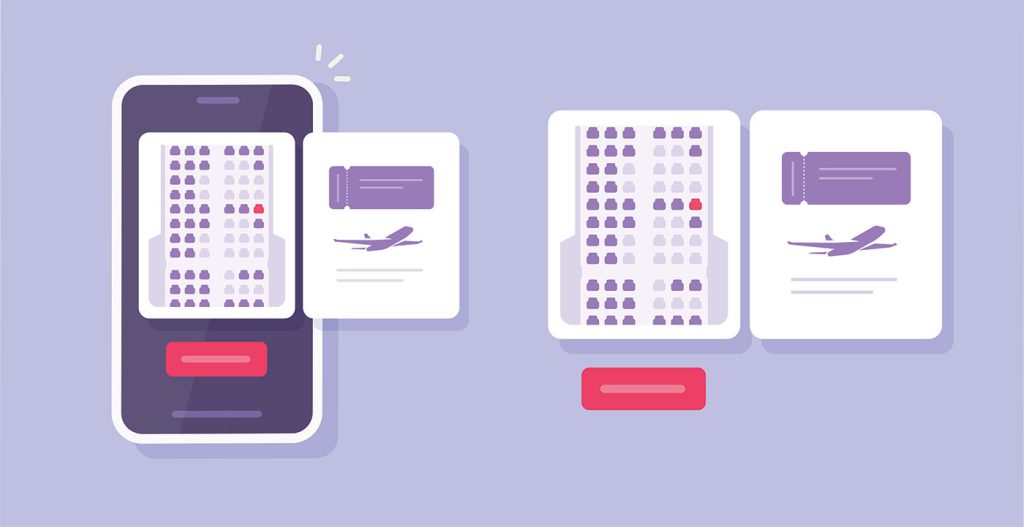
In the world of advanced UX strategy, few industries demonstrate the power of persuasive (and often problematic) design better than the airline indust

Let’s be real—the internet is broken. It’s a mess! Once upon a time, it was this wild, open frontier, a digital playground where anyone with a dial-up
We’ve got a mix of handy image helpers, useful design assets, and clever productivity tools, amongst other treats. Some are brand new, some are new ve
I’m stood in the center of a room, confident my choice to go all static had been a good one. It’s a serene scene—nothing can touch me.There are websit
We are a dynamic information platform dedicated to delivering timely, relevant, and reliable content across a broad spectrum of topics. From the latest in technology and business to lifestyle, health, and global affairs, we aim to keep our readers informed and inspired.
Our editorial team is committed to maintaining high standards of accuracy and clarity, ensuring that every article provides value and context in an ever-changing world. We believe in the importance of accessible knowledge and strive to make complex topics understandable for everyone.
Whether you're here to stay updated on current events, explore thought-provoking features, or simply learn something new, our goal is to offer a trustworthy source of information that meets the needs of a diverse and curious audience.