Our Interfaces Have Lost Their Senses — And It’s Time to Bring Them Back!
Technology is speeding ahead at a breakneck pace, but have we lost something important along the way?In a beautifully designed and thought-provoking p


There’s a special kind of web designer out there. You won’t always spot them in the wild because they’re usually busy fixing something someone else forgot to do. Or weren’t hired to do. Or said “wasn’t their job.”
I’m talking about the generalist. The all-in-one, multi-tab-having, too-many-Slack-channels hero who makes the modern internet work—and often gets zero credit for it.
You know who you are. You design the site. You build it. You write the copy when no one else steps up. You wrestle with the CMS. You Google why Safari is broken again. You promise yourself you’ll never do another DNS migration… as you’re doing another DNS migration.
You are the generalist. You’re not just wearing many hats. You’re basically the milliner.
And while the rest of the industry debates design tokens vs. component libraries, you’re over here resizing the client’s JPEG logo for the third time because someone thought a 32×32 image would print well on a billboard.
There’s this mythology in tech that the future belongs to specialists. Focused, precise experts who do one thing really well. Respect. Truly.
But if you’ve ever worked at a startup, agency, or anywhere the budget is slightly smaller than the dream—specialists don’t ship products. Generalists do.
Generalists are the ones duct-taping the launch together while also rewriting a critical user flow because the client decided they hate blue now.
It’s not glamorous. It’s not scalable. But it’s how 90% of the web gets made.
Being a generalist means your job description looks like a kitchen sink got into a bar fight with LinkedIn.
“Web Designer / UX Researcher / Front-End Dev / Copywriter / Accessibility Advocate / Low-Code Tinkerer / Brand Whisperer.”
That’s not a résumé. That’s a cry for coffee.
And yet, when something breaks at 10pm—you get the call. Because unlike everyone else, you probably know how it works. Or at least, how to pretend you do long enough to fix it.
Look, being a generalist is messy. On any given day, you’re bouncing between Figma, VSCode, Notion, Chrome DevTools, and a client call where someone says the words “make it pop.”
You don’t have the luxury of handoff meetings and clean boundaries. You are the meeting. You are the boundary.
You’ve built MVPs with no team. Designed brand systems with no brief. Shipped products with no roadmap. You’ve learned the tools, adapted to the chaos, and still somehow kept it together.
Well. Mostly.
Here’s the honest truth: when a project is on fire, no one looks for a rockstar product designer or a pixel-perfect developer. They look for you—the generalist.
You’re the firefighter. The fixer. The person who can jump into any part of the stack (or brand) and make progress.
You might not be the best at any one thing. But you’re scary good at a lot of things. And in an industry obsessed with specialization, that’s your superpower.
Here’s where it gets interesting. AI is coming for the specialists. Image generators, code writers, layout tools—they’re slicing up the narrowly defined roles.
But generalists? You’re still safe. Why? Because your job isn’t just pressing buttons. It’s making judgments across disciplines. It’s context-switching with grace. It’s seeing the whole picture—and knowing which part is about to fall apart.
AI can give you options. It can suggest. It can generate. But it can’t decide what the right move is across design, code, branding, tone, timing, platform, and budget.
Yet.
So keep using the tools. Just remember: you’re still the one piloting the ship.
Being a generalist can feel like a curse. You’re spread thin. You’re often invisible. You rarely get the praise specialists get for “crushing” that one pixel-perfect animation.
But the truth is, you are the reason things ship. You are the connective tissue between roles. You’re the one who understands enough of everything to actually build something.
So own it. Be proud of the weirdness. The range. The ability to do ten things decently when most people can barely do one without Googling it.
You’re not a jack of all trades. You’re the Swiss Army Knife of Web Design—and in a world of single-use tools, that’s exactly what we need.
Want a career path? You probably already designed it, built it, launched it, and A/B tested it in your sleep.
And no, you don’t just “do websites.” You do the web. Period.
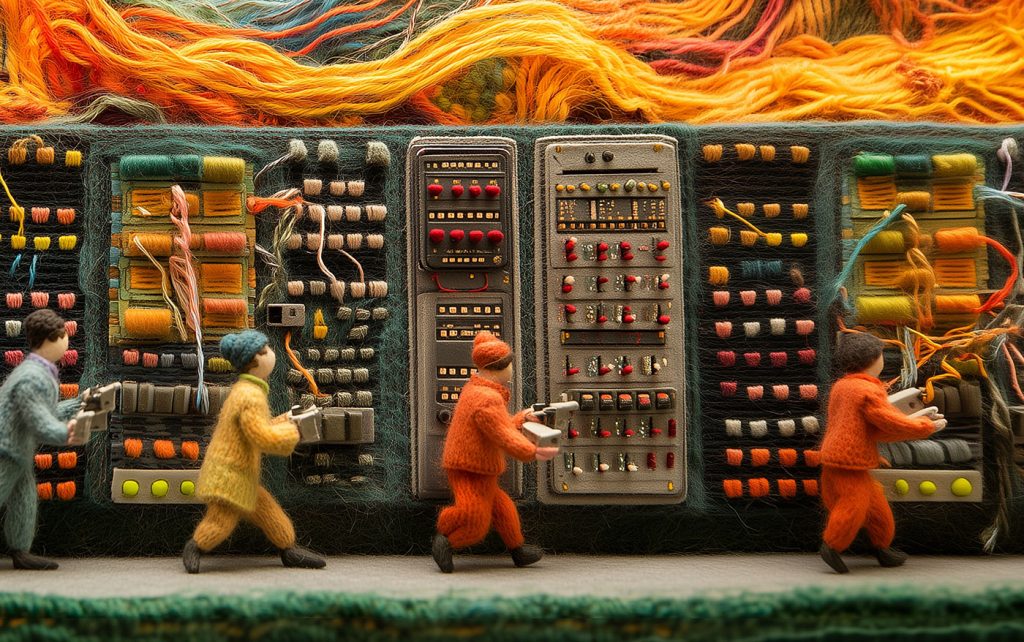
Technology is speeding ahead at a breakneck pace, but have we lost something important along the way?In a beautifully designed and thought-provoking p

AI can help designers automate repetitive tasks, gain insights into user behavior, and streamline processes in web design. In this article, we will ex

Let’s talk about the ancient art of the thumbs-up and thumbs-down — once the sacred, clumsy handshake between user and algorithm.In the early days of

You probably know by now that NFT stands for Non-Fungible Token; what is perhaps less clear is what “Fungible” actually means; in this context, it mea

The world of search engine optimization was born with all sorts of different hacks and shortcuts that many people use in an effort to grow their busin

Understanding why this is the case is not hard. Modern digital marketing is all about engaging with your audience and sharing personal stories. And th
We are a dynamic information platform dedicated to delivering timely, relevant, and reliable content across a broad spectrum of topics. From the latest in technology and business to lifestyle, health, and global affairs, we aim to keep our readers informed and inspired.
Our editorial team is committed to maintaining high standards of accuracy and clarity, ensuring that every article provides value and context in an ever-changing world. We believe in the importance of accessible knowledge and strive to make complex topics understandable for everyone.
Whether you're here to stay updated on current events, explore thought-provoking features, or simply learn something new, our goal is to offer a trustworthy source of information that meets the needs of a diverse and curious audience.