Is it time you opened a design agency?
You’ve been busting your ass for years as a freelance designer, taking projects as they come, performing every role required for a successful business


Design trends evolve at a blistering pace, especially in web design. On multi-month projects, you might work on a cutting-edge design after the kick-off meeting, only to launch a dated-looking site.
Enter predictive analytics — a machine learning approach that can trace patterns in datasets and even anticipate future pattern shifts.
Predictive analytics has been around for decades, but it’s only with the maturation of Artificial Intelligence (AI) that the analytical processes can be automated, allowing practical application of what, until now, has been a largely theoretical field.
When properly applied, predictive analytics can be transformed from a forecasting tool into a cornerstone of your creative strategy.
Predictive analytics involves using algorithms to analyze historical data, using it to forecast future trends. It integrates statistical, modeling, data mining, and machine learning techniques, enabling decision-makers to see patterns and predict future outcomes with varying degrees of probability.
AI significantly enhances predictive analytics accuracy by rapidly analyzing a larger dataset than a human can. Additionally, AI can teach itself by adapting and learning from real-world results rather than historical data. As AI models improve accuracy, they will transform the design industry by offering accurate and actionable trend forecasts.
In design, predictive analytics draws on a vast array of data, from historical sales figures to customer demographics, online behavior patterns, and live feedback from design iterations. Visual data, such as images and design assets from previous campaigns, helps AI determine what will resonate with consumers. Large AI systems can even trawl external sources, like design awards, to see what professional designers rate highly.
Predicting future trends using AI involves a detailed and systematic process of analyzing both historical and up-to-date information. It usually follows this pattern:
By following these steps, AI can effectively analyze data to predict future trends, helping businesses stay ahead in competitive markets.
There are two major benefits to using AI to perform predictive analytics, the first is speed and efficiency. Traditional methods, much like the speculative analysis we conduct ourselves, are time-consuming and, as a result, can lag behind the market, meaning that by the time your analysis is complete, your data is out of date.
By comparison, AI — particularly when powered by a suitably powerful machine — can instantly process vast quantities of data. As a result, the predictions are more timely and become actionable.
The second major benefit is AI’s ability to catalog and process vast amounts of data to compare. While a human might conceivably compare a few hundred designs in a day or so, AI can compare thousands in mere seconds. Consequently, AI’s predictive analytics are far more powerful than anything human beings can achieve.
Of course, AI is not flawless. The accuracy and reliability of its predictions are dependent on several factors, including:
AI trend predictions are transformative for the industry, but there are challenges. The most obvious is the inherent bias in data — it’s a sad reality that all societies are, to a greater or lesser extent, plagued by sexism, racism, homophobia, ageism, xenophobia, and numerous other prejudices. Often, these biases enter models without our realizing it. Occasionally, it is the act of attempting to remove these biases that output the wrong results, as was the case recently when Microsoft’s Gemini project output images of black nazis and native american vikings. Bias can cause AI to misunderstand the cultural nuances that drive design trends.
Despite these challenges, when guided correctly by an experienced designer, AI is capable of impressive levels of accuracy and is always improving.
AI technologies will develop a deeper understanding of human creativity as they evolve. This evolution is likely faster than the progress made so far simply because the business model for AI has been proven.
Ultimately, AI may predict trends based on historical data and generate original creative proposals, acting as a co-designer in the process.
AI makes design trend forecasting faster and more accurate than ever before. However, it will be some time before AI understands and takes into account the inherent bias in data. At least for the foreseeable future, AI can’t perform without a human to edit its results, and so AI remains a tool to serve human creativity rather than replace it.

You’ve been busting your ass for years as a freelance designer, taking projects as they come, performing every role required for a successful business

“How do I get more clients?” It’s a question most freelancers struggle with. It’s tough to attract great clients and predictable income when you’re ju
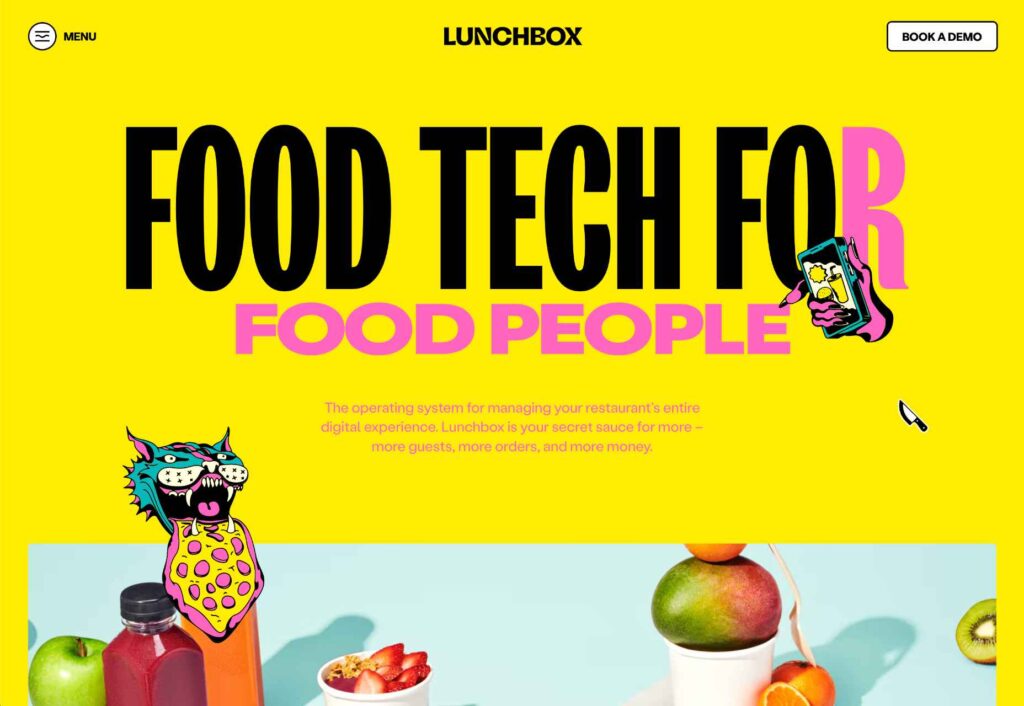
Sometimes, creating the ideal design means thinking carefully about what you want to accomplish for your client. The purpose of your web creation has
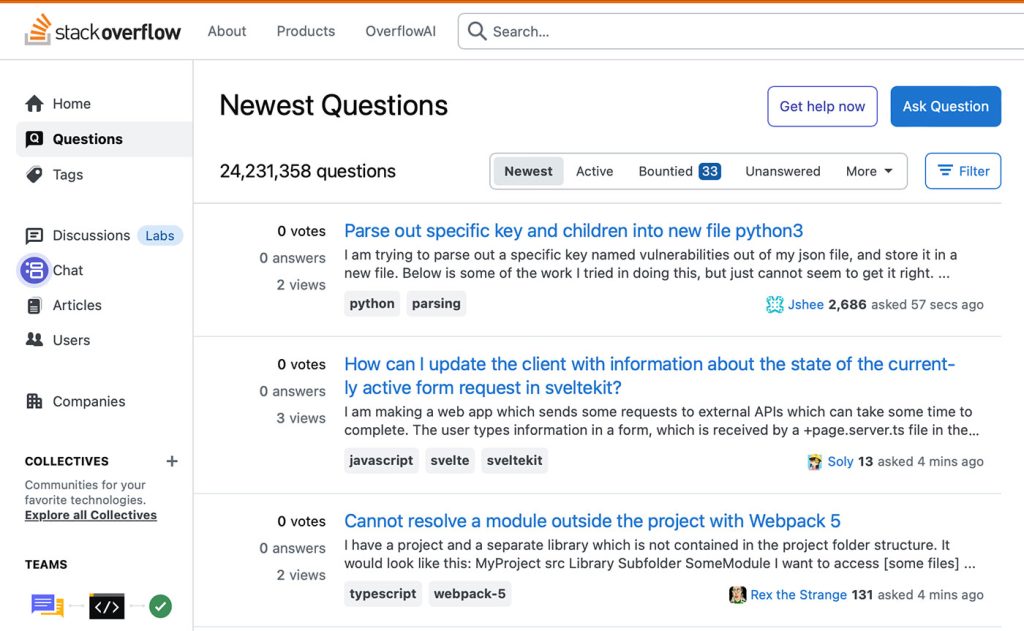
In the early days of web development, Stack Overflow was a lifeline. It was where developers turned for answers, code snippets, and discussions about
Jumpshot took a look at how online searches were most commonly conducted in 2016. What’s not surprising is that Google owned the majority of online se
Affordance is a term originally coined by a psychologist, J.J. Gibson, in the 1970s. He defined it as the relationship between an environment and an a
We are a dynamic information platform dedicated to delivering timely, relevant, and reliable content across a broad spectrum of topics. From the latest in technology and business to lifestyle, health, and global affairs, we aim to keep our readers informed and inspired.
Our editorial team is committed to maintaining high standards of accuracy and clarity, ensuring that every article provides value and context in an ever-changing world. We believe in the importance of accessible knowledge and strive to make complex topics understandable for everyone.
Whether you're here to stay updated on current events, explore thought-provoking features, or simply learn something new, our goal is to offer a trustworthy source of information that meets the needs of a diverse and curious audience.