Meaningful Ways to Measure Website Success
Your website is often the first thing people see, where they go to learn more about you, get information, or even make a purchase. But just having a w

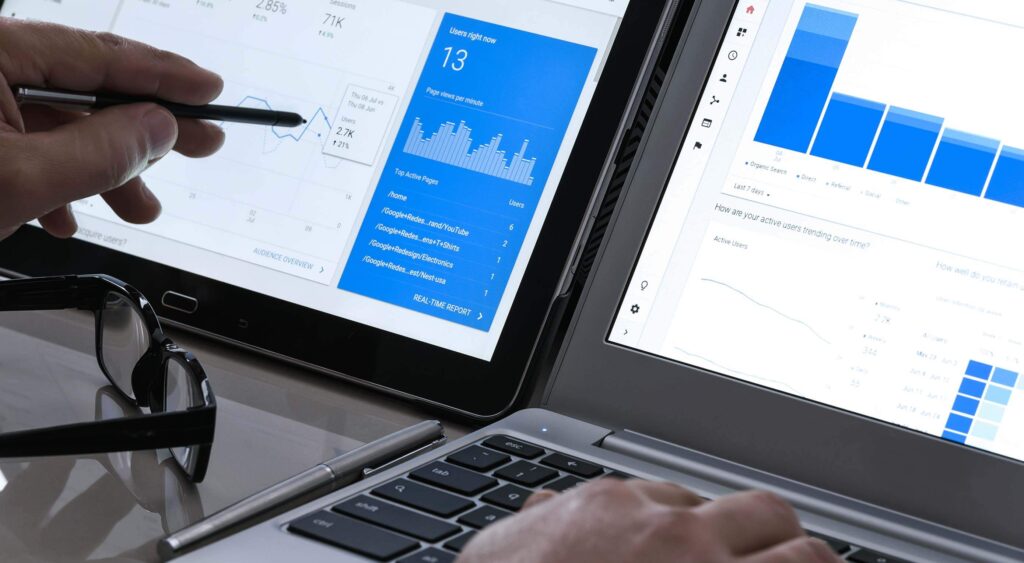
UX design and a solid SEO strategy go hand in hand.
Design is here to boost user experiences, inspire users to spend more time on your pages, and ensure they don’t leave your site frustrated. This way, it minimizes bounce rates and turns your visitors into leads and, ultimately, sales.
However, designing a spotless website is pointless if it’s not visible on Google. This is where SEO shines. It increases your site’s exposure in the SERPs, drives greater traffic to it, and gives you the opportunity to delight a visitor with your gorgeous website design and quality content.
When merged together, web design and SEO are indicators of your credibility and professionalism.
So, let’s see how to combine them for a better online performance.
In the world of digital marketing, building your online presence on strong foundations is critical. If some basic aspects of your site are poorly managed, you cannot expect your web design or SEO to deliver exceptional results.
Here are key elements of any strong web design:
Stuffing your domain with a bunch of keywords won’t help. They look spammy and may hurt both your rankings and user experience.
Remember that there are millions of domain names out there. So, your goal is to make your domain name catchy and memorable. It needs to be relevant to your business’ focus and be easy to spell and pronounce. To make your site easier to find, it’s always good to use your brand name as your domain name, too.
Choosing the right hosting plan directly impacts your website speed, server performance, and uptime/downtime. These are all important UX factors Google considers while indexing and ranking your site.
A solid CMS is one that is easy to use and manage. You should be able to design your site however you want, without taking additional courses in web design. It should also help you make your site mobile-friendly, add social media integrations effortlessly, and use various content management tools. The most popular CMS option is definitely WordPress, followed by Joomla, Drupal, TYPO3, and Squarespace.
When choosing the right CMS for your business, ask yourself how it will impact your online performance. For example, does it allow you to customize your URLs? Can you make on-page changes without changing the URL? Some systems create meta tags (meta descriptions and title tags) automatically, so you should check whether you can modify them.
Did you now that Google crawls each page of your site individually when indexing it? That’s why you need to add internal links to make these pages findable by search engines. Most importantly, you need to check whether all your interlinks work.
Start with the simple Google search. For example, the site: operator will help you see all your pages that are indexed. You could also check robots.txt files (https//www.yourdomainname.com/robots.txt) to identify your site’s disallows. Sure, you can speed this process up using web crawlers like Screaming Frog or Google Search Console’s Index Status that will do the job for you.
On-page SEO can be viewed as a process of optimizing individual pages on a site to rank higher. In short, you need to do detailed keywords research and optimize your key page elements for them.
Which URL seems more logical to you?
The first one, I hope.
Well-optimized URLs tell users what the page is about and help them find the desired information or products faster. Just like title tags and meta descriptions, they provide a wider context around your keywords for both users and search engines. Precisely because of that, your URLs need to be descriptive, short, understandable, and optimized for your major keywords.
Navigation goes beyond a simple menu bar at the top of your site. When used properly, it inspires people to stay more on your site and browse through it.
When building website navigation, it’s critical to understand the needs and expectations of your potential customers. Just like at any physical store, website navigation should help a potential customer find a product or content faster and guide them through their buyer journey towards finalizing a purchase. If a customer needs to waste their time thinking where to click, that’s a clear sign you need to improve your navigation.
Page speed is one of the most significant ranking factors. And, with the 2018 Speed Update, it has become a notable ranking signal for mobile devices, too.
Page load times are important for a good reason- they impact user experiences and can result in either higher conversions or bounce rates. Stats back me up on that. For example, did you know that your visitors expect your site to load in less than 2 seconds? And, if it fails to do so, almost half of them would leave it. Apart from losing potential leads and conversions, high bounce rates have a negative impact on your online performance and ranking in the long run.
For starters, use Google’s Page Speed Insights to find out how fast your pages are. Here are a few steps to take to boost your site speed, such as:
With the number of mobile users, mobile searches have also grown. For example, did you know that 57% of all US online traffic is generated through mobile devices?
And, for your mobile visitors, their browsing experience determines whether they will buy from you. Stats say that 52% of your potential customers would not to make a purchase after a negative mobile experience.
Given these figures, it’s not surprising that Google is constantly striving to improve mobile users’ satisfaction and provide them with relevant results. This year, they finally rolled out the Mobile-First Index, meaning that they’re now indexing a mobile version of your site.
And, to meets these standards, you need to make your site design highly responsive.
What does this mean?
Use Google’s Mobile-Friendly Test to check how friendly your pages are to mobile users. When optimizing your site, pay attention to the overall site’s usability, such as its speed and page layout. How appealing is your site to mobile users? Can they read your content and see your videos without having to zoom and pinch continually? What about your CTA’s and links- are they easy to tap? Does your content fit the screen size, irrespective of its size? Are your forms easy to fill out from mobile devices?
Even if you believed that SEO and web design have nothing in common, I hope this article proves you wrong. Your website design impacts visitors’ perceptions of your brand, making it feel professional and authoritative. Above all, it impacts user experiences and impacts their engagement and purchase decisions. These are all factors Google takes into account when ranking you.
Featured image via DepositPhotos

Your website is often the first thing people see, where they go to learn more about you, get information, or even make a purchase. But just having a w

There’s a special kind of web designer out there. You won’t always spot them in the wild because they’re usually busy fixing something someone else fo

Every human being needs, rather desperately, to feel accepted. They don’t necessarily need to feel accepted by everyone, but they do need to feel acce

If you’ve ever rage-closed an app because it wouldn’t let you “go back” or stared at a form that made you feel like you were applying for citizenship

Let’s be real: the design industry loves pretending things are brand new.Every year, the blogs and conference slideshows tell us what’s “in,” and ever

As a website designer, your professional life revolves around crucial questions that might help you to deliver better results for your clients.Which w
We are a dynamic information platform dedicated to delivering timely, relevant, and reliable content across a broad spectrum of topics. From the latest in technology and business to lifestyle, health, and global affairs, we aim to keep our readers informed and inspired.
Our editorial team is committed to maintaining high standards of accuracy and clarity, ensuring that every article provides value and context in an ever-changing world. We believe in the importance of accessible knowledge and strive to make complex topics understandable for everyone.
Whether you're here to stay updated on current events, explore thought-provoking features, or simply learn something new, our goal is to offer a trustworthy source of information that meets the needs of a diverse and curious audience.