8 Domain Name Myths Every Web Designer Should Know
A domain name is an essential element of every project, product, and company. It’s central to a brand and has a disproportionately large impact on use


A colleague recently said to me, “I’ve heard that you’re a client relations guru. Are there any tips or tricks that you have for starting to build up those relationships?”
I always love a question like this—something that makes me stop and reflect. It’s true. Working with people and developing new (or existing) relationships is something I have a knack for. Even though I self-identify as an introvert, I love doing it because genuinely connecting with other people, hearing about their experiences, challenges, wins, quirky-cool talents, what winds their clock (and sharing in return)…well, it actually means something to me.
Was that the big secret? Or was there more?
Could I summarize everything I do to establish a client relationship—things I do without even thinking— and distill it into a list of best practices anyone can apply?
Short answer? Yes.
The next seven tips sum up my advice for building great client relationships within the context of project management.
I know there are people who successfully work 100% remotely. I get that. But at some point, if you want to build and maintain great, deep, lasting connections with your clients, you need that human relationship phenomenon that only happens when you’re in person. It’s different. Good different.
[pullquote]I like to meet in person…when I just “feel” like we haven’t met in person in a while[/pullquote]
As a general rule, I like to meet in person for an initial conversation, key deliverables, or when I just “feel” like we haven’t met in person in a while. It’s a gut thing, which you’ll need to develop with each new client relationship you cultivate.
Don’t hide behind email. In today’s day and age, depending on your personality, your workload, and that of those you’re in contact with, it can feel easier to just send an email.
Often email is a good choice, but be aware of the fact that live human-voice connection is like wholesome, all-natural medicine. Your job as a project manager is to nurture your relationships with the right dose of it. There’s no one-size-fits-all approach. It depends on how active the project is, your client’s personality, and the kind of work you’re doing. The important takeaway here is, make sure it’s part of your approach.
At least the initial presentation of it does. That way you hear any concerns, questions, or confusion right away and nothing is left to fester if there’s a misunderstanding.
[pullquote]Money is a hot button for everyone so it’s best to treat it firmly, respectfully, bravely, and humanly[/pullquote]
When delivering an initial quote/proposal to a client (or an estimate of new scope for a project I’m already working on), I schedule a call or an in-person meeting to walk them through things together. I tell them: we may only need 5 or 8 minutes ,but let’s reserve 45 minutes on our calendars in case we need to cover anything in more detail. Then I send my email, quote, proposal a few minutes beforehand.
Money is a hot button for everyone so it’s best to treat it firmly, respectfully, bravely, and humanly.
As PMs, we should be anticipating what our clients might be wondering or worrying about in advance. The client should never have to ask, “What’s the status on
Again, there’s no standard approach to use for all projects and clients. You’ll have to find the right balance, since you don’t want to over-communicate either. But here’s a couple of practical takeaways that might help:
Corollary to the regular check-in: Batching communication is great except when it’s time-sensitive or potentially impactful bad news. What’s bad news? Anything that will cost more, take longer, or be “less good” than the client was expecting. Depending on timing, it may still be OK to wait for your next scheduled check in (if it’s tomorrow). Otherwise, barring a reasonable effort/assessment of whether you can fix said situation so as to circumvent the delivery of any bad news, don’t wait.
Mistakes will happen. When they do, own them. But, don’t emotionally collapse and beat yourself up. Every challenging situation, every bump is an opportunity to strengthen the relationship, build trust, and collaboratively solve a situation.
[pullquote]take responsibility for everything you…need to own, plus a little bit more[/pullquote]
Listen to the client if they have a gripe. Thank them for their honesty. Convey that you will be talking to your team to gain further understanding and perspective on what’s happened and that you’re committed to resolving a situation in a way that’s okay for everyone. Remember that you have permission to be fair to yourself and the company you represent (as in, don’t completely fold and give away the store).
That said, take responsibility for everything you and your company really need to own, plus a little bit more. Be honest, transparent, respectful, firm, human, compassionate, and be smart about it.
Become Friends. Be genuinely interested in the person. The best working relationships go beyond the work and have personal connection on a variety of levels. At an appropriate level and pace (that you have to figure out), allow that to happen. Don’t pry. Don’t force. Don’t be creepy. Just be genuine and human.
At some point, you should know your client’s favorite color, that they love dogs, or that they’re both happy and sad because their first-born is going off to college. And remember, it’s a two way street, so you’ll be sharing things about yourself too.
Back in the mid-90s, when my husband and I first founded Gravity Switch, a fellow consultant (named Ed) gave us some unsolicited advice. He said, “The secret to a successful project is managing client expectations.”
We laughed at this advice. Heartily. But not to his face.
Expectations? C’mon… What about great design? What about solid programming? What about projects coming in on budget and on time? You know, all the important stuff that PMs have to think about.
But duh!
What context defines that great design and the solid programming? What context defines whether something is on budget or on time?
I had this aha moment when I realized that Ed was totally right. By the way, I called him up (it was 15 years later) and told him of our folly, admitted laughing (heartily) at his advice, thanked him for sharing it, and apologized for being a little slow on the uptake.
Key takeaway: if you’re managing expectations, what’s interpreted as “great work” and “a great working experience” will follow.
Featured image via DepositPhotos.

A domain name is an essential element of every project, product, and company. It’s central to a brand and has a disproportionately large impact on use
It’s happened to every designer at some point: A client or co-worker makes an absolutely cringe-worthy comment about your work.Feedback is important.

That starts with having the right marketing tools and resources to facilitate your design career. But it takes more than having these tools at your di

There’s a pattern that’s haunted web design for over a decade now—one so embedded in our collective workflow that questioning it feels almost heretica

Your target market has gone mobile. Mobile users spend up to 12% of their time browsing on their device, which works out to 87 hours a month or 1,044
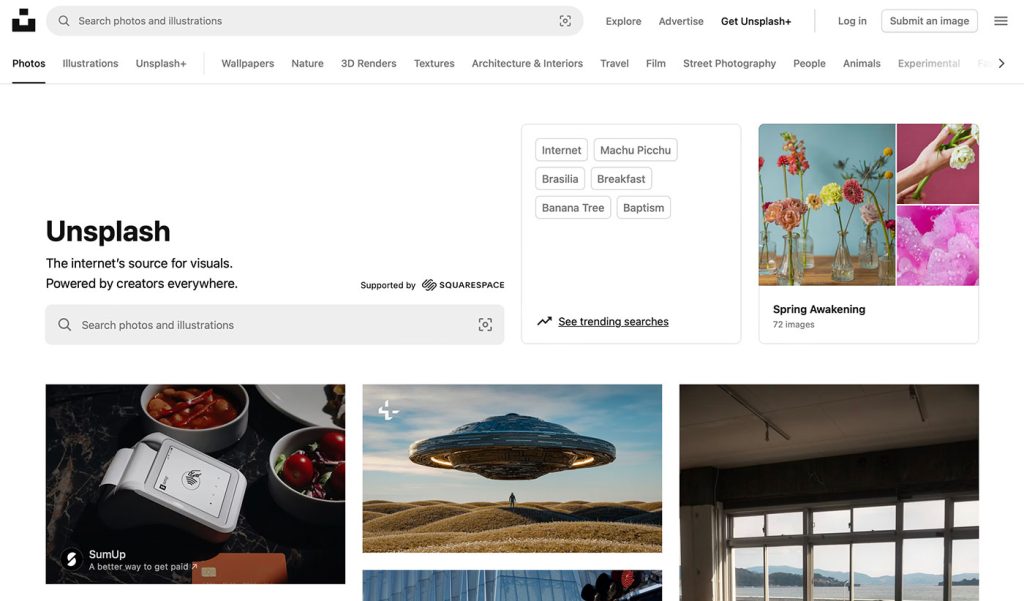
Have you ever visited Unsplash, that go-to treasure trove of beautiful, free stock images, and wondered why on Earth they’ve decided to clutter their
We are a dynamic information platform dedicated to delivering timely, relevant, and reliable content across a broad spectrum of topics. From the latest in technology and business to lifestyle, health, and global affairs, we aim to keep our readers informed and inspired.
Our editorial team is committed to maintaining high standards of accuracy and clarity, ensuring that every article provides value and context in an ever-changing world. We believe in the importance of accessible knowledge and strive to make complex topics understandable for everyone.
Whether you're here to stay updated on current events, explore thought-provoking features, or simply learn something new, our goal is to offer a trustworthy source of information that meets the needs of a diverse and curious audience.